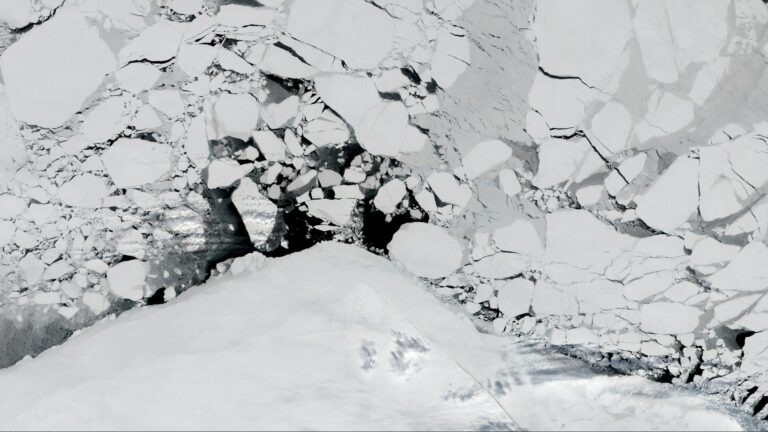
The Intergovernmental Panel on Climate Change (IPCC) yesterday released the IPCC Working Group 1 report, “Climate Change 2021: The Physical Science Basis” (the Report), part of the Sixth Assessment Report, providing an updated assessment of the physical understanding of the current state of the climate system and climate change. The Report predicts that global temperatures are likely to continue to increase beyond the 1.5-2°C target of the Paris Agreement without widespread and steep global reductions in greenhouse gas (GHG) emissions. This bulletin summarizes the Report’s key findings. The current state of the climate. The Report reiterates that the warming of the atmosphere, oceans, and land are human-caused, with rapid changes being observed in the atmosphere, ocean, cryosphere, and biosphere. In addition, the Report confirms that anthropogenic climate change is globally affecting weather and climate extremes, with increased heatwaves, heavy precipitation, droughts, and tropical cyclones more readily attributed to human influence. Possible climate futures. According to the Report, under all emissions scenarios, global surface temperatures will continue to increase until mid-century, with temperatures predicted to exceed 1.5-2°C this century without deep reductions of GHGs. As the climate warms, changes in climate systems will become larger, increasing the frequency and intensity of hot extremes, marine heatwaves, heavy precipitation, droughts, intensity of tropical cyclones, and reductions in Arctic sea ice, snow cover, and permafrost. The Report indicates that changes in the ocean, ice sheets, and global sea levels, resulting from past and future GHG emissions, will likely be irreversible for hundreds of years. Climate information for risk assessment and regional adaptation. The Report indicates that all regions are expected to increasingly experience concurrent and multiple changes in climatic impact-drivers amplified at 2°C compared to 1.5°C, with greater increases at even higher global temperatures. The Report also indicates that even “low-likelihood” outcomes such as…
The Government of Canada has issued a background paper and launched public consultations on border carbon adjustments (BCAs). The initial exploratory phase of consultations will involve targeted discussions with provinces and territories, as well as industry associations representing sectors most directly impacted (i.e., importers and exporters dealing in emissions-intensive goods). A limited number of labour and environmental organizations and academics with expertise on BCAs will also be engaged. The government intends to consult the broader Canadian public this fall and continue international engagement with trading partners and like-minded countries. Feedback is sought in relation to: Environmental outcomes. How adding BCAs to Canada’s climate policy toolbox could build on Canada’s existing climate change policies to deliver equivalent or better environmental outcomes. Economic pressures. What economic impacts BCAs may have, and the distribution of those impacts across sectors and regions, including for consumers. International engagement and trade relations. As a trade-dependent economy how BCAs may affect Canada’s trading relationships and areas where further work is required for cooperation on BCAs with trading partners. The federal government has indicated that four main inter-related objectives are driving its consideration of BCAs: (i) reducing the risk of carbon leakage; (ii) maintaining the competitiveness of domestic industries; (iii) supporting greater domestic climate ambition; and (iv) driving international climate action. The government signalled its intent to move forward with a two-phase consultation process on BCAs in Budget 2021. Canada’s recent focus on BCAs is aligned with work on similar policies in the European Union and the United States and we anticipate that BCAs will be a topic of significant discussion at COP26, beginning November 1, 2021 in Glasgow. For further information or to discuss the contents of this bulletin, please contact Lisa DeMarco at lisa@resilientllp.com.
The federal government has issued its strengthened benchmark stringency criteria in line with previously announced increases to the carbon price (rising at $15/tonne per year to $170/tonne by 2030). The government previously indicated its intent to strengthen the benchmark stringency criteria for the post-2022 period in September 2020. The government intends to seek confirmation from provinces and territories on whether they intend to maintain or implement a carbon pricing system for the 2023-2030 period and assess provincial and territorial submissions against the updated federal benchmark criteria in 2022 for the 2023 to 2030 period. The 2016 benchmark continues to apply for assessments of carbon pollution pricing system stringency for the 2018-2022 period. Provinces and territories must implement (a) an explicit price-based system (i.e., (i) a carbon levy on fossil fuels, or (ii) a hybrid system comprised of a carbon levy on fossil fuels and an output-based pricing system for industry) or (b) a cap-and-trade system. Partial explicit price-based system must be designed to fully replace either the federal fuel charge or the federal OBPS. Where a province or territory implements a partial system that does not fully replace the federal fuel charge or OBPS, the corresponding federal backstop system part (i.e., fuel charge or OBPS) will apply in full in the jurisdiction. The updated benchmark sets new requirements for both explicit price-based systems and cap-and-trade systems, in the following areas: Explicit price-based systems: (i) carbon price ($65/tonne in 2023, rising $15 per year to $170/tonne in 2030); (ii) common scope; (iii) price signal (no measures to offset, reduce or negate); (iv) stringency of output-based pricing systems (OBPS) for industry; (v) restriction on OBPS and performance-based rebate approaches under a carbon levy; (vi) offset credits; and (vii) public reporting. Cap-and-trade systems: (i) maximum emissions cap (corresponding at minimum to projected emissions levels…
Ontario Ontario has introduced amendments to regulations under the Nutrient Management Act, 2002 that will enable farmers to produce biogas for the renewable natural gas (RNG) market. The regulations were first proposed in January, 2020 by the Ministries of Agriculture, Food and Rural Affairs and Environment, Conservation and Parks to assist farmers in recycling food and organic waste with anerobic digesters. The new regulations will: clarify design and construction requirements to support RNG production while seeking to maintain environmental protections for neighbours and local communities. provide greater flexibility in the amount and type of on- and off-farm anaerobic digestion materials permitted for use in regulated mixed anaerobic digestion facilities to make the generation of RNG more effective, efficient, and economical for farmers. simplify operational requirements regarding the sampling and analysis of received materials to reduce costs and enhance operational flexibility for farmers. The Government of Ontario expects the changes to: increase opportunities for management of food and organic waste in the circular food economy; increase production of RNG in Ontario; and increase economic development opportunities in the agri-food sector. British Columbia The BC Ministry of Energy, Mines and Low Carbon Innovation earlier this month announced amendments to the Greenhouse Gas Reduction Regulation (GGRR) to support the production and use of RNG and green and waste hydrogen. The GGRR allows utilities to make time-limited investments, with volumetric and expenditure caps, to support RNG development and procurement. The amendments will increase the current caps for investments in RNG and expand the scope of the GGRR to include other renewable gases, such as hydrogen. BC estimates that increased use of RNG could reduce GHG emissions by up to 450,000 tonnes per year. The amendments will also increase the amount of RNG, green and waste hydrogen, and other renewable energy that utilities can acquire for customers, supporting provincial commitments for a…
U.S. Senator Chris Coons and House Representative Scott Peters, both Democrats, earlier this week unveiled the “Fair, Affordable, Innovative, and Resilient (FAIR) Transition and Competition Act” (the Act), which, if enacted, would establish a border carbon adjustment (BCA) to be imposed as a fee on imports, starting on January 1, 2024. This follows the recent release of climate and emissions reduction proposals by the European Commission which also include BCAs for imports into the European Union. This bulletin briefly outlines the key provisions of the Act. Sectors. The Act would apply to industrial facilities that produce the following products: Steel; Aluminum; Cement; Iron; and Any product which is composed of over 50 percent of any of the above products. Determination of domestic environmental cost incurred. The Act would empower the Secretary of the Treasury (the Secretary) to annually determine the domestic environmental cost incurred for each sector or the average cost to produce a covered fuel (natural gas, petroleum, and coal), to comply with federal, state, regional, or local law, regulation, policy or program which, inter alia, is designed to limit or reduce greenhouse gas (GHG) emissions, including cap-and-trade systems, carbon taxes, and fees. Border carbon adjustment. The Secretary would administer the BCA through regulation and guidance. The Secretary of State and the United Stated Trade Representative would engage with other countries to reduce global GHG emissions and ensure fairness in the application of the emissions-based tariffs. A fee would be applied to any covered good (either a covered fuel or product produced within a sector) to be determined based on the domestic environmental cost incurred multiplied by the production of GHG emissions of the product or the upstream GHG emissions of the covered fuel. The BCA would not apply to (i) countries on the Least Developed Countries list of the OECD and (ii) countries that…